As society continues to develop and evolve, the realm of art has undergone profound transformations. As an emergent art form, contemporary art not only offers entirely new aesthetic experiences but also, to a significant extent, mirrors the shifts occurring within social culture. Cultural change refers to the gradual process of quantitative alteration in the content and structure of a culture; it is broadly categorized into two types—unconscious, natural change and planned, conscious change—and encompasses the evolution of various elements, such as cultural traits and patterns. Its core mechanisms involve innovation, diffusion, and acculturation; its driving forces include factors such as internal social development, changes in the natural environment, and cross-cultural contact; and the process of cultural borrowing is characterized by its selective nature.
This process shares a dialectical relationship with social change: shifts in social relations and group structures often serve as catalysts for cultural change, while the evolution of artistic styles, in turn, reflects the broader transformation of social structures.
The Relationship Between Contemporary Art and Sociocultural Change
Contemporary art represents a breakthrough and innovation relative to traditional art forms.
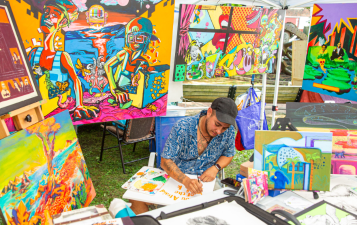
In traditional art, the primary focus lies on the technique and form of the artwork itself; contemporary art, conversely, places greater emphasis on expressing the artist's thoughts, concepts, and emotions. Through a diverse array of media and modes of expression, contemporary artworks convey the prevailing values and cultural characteristics of modern society.
First and foremost, contemporary art reflects the increasingly pluralistic and fragmented nature of sociocultural change. In today's world, the twin trends of information explosion and globalization expose individuals to a deluge of information and a confluence of diverse cultural influences. Emerging against this backdrop, contemporary art employs an artistic language characterized by fragmentation, diversity, and hybridity; in doing so, it prompts viewers to engage in critical thought and self-reflection, allowing them to experience firsthand the changes and perplexities that sociocultural shifts impose upon the individual.
Contemporary art spearheads a transformation in aesthetic trends.
Traditional art forms are often dominated by established standards of beauty, whereas contemporary art expands the scope of aesthetics into a much broader and more expansive domain. Contemporary artworks may manifest in forms that are not conventionally "beautiful"—or may even deliberately subvert traditional aesthetic norms. By redefining the very concept of aesthetics, artists guide viewers toward a transformation of their own aesthetic sensibilities—a shift that aligns harmoniously with the inherent pluralism of sociocultural change.
Contemporary art serves as a platform for reflecting upon social issues.
Contemporary society faces a multitude of challenges and problems—ranging from environmental pollution and social inequality to the abuse of power, among others. Through their works, contemporary artists draw attention to and portray these social issues, prompting viewers to engage with and reflect upon them, thereby fostering social development and progress.
The Impact of Contemporary Art on Society
Contemporary art is not merely an artistic form; it is, more importantly, a vehicle for the transmission and inspiration of ideas. By reflecting upon and critiquing socio-cultural shifts, it stimulates public awareness of and critical engagement with social issues. The impact of contemporary art on society is primarily manifested in the following aspects:
1. Contemporary Art Fosters Appreciation and Respect for Cultural Diversity
Against the backdrop of globalization, interactions and encounters between different cultures are becoming increasingly frequent. As a medium, contemporary art integrates elements from diverse cultures, enabling people to gain a deeper understanding and appreciation of cultures other than their own, thereby promoting the flourishing of cultural diversity.
2. Contemporary Art Drives Awareness of—and Action Regarding—Social Issues
Through their works, contemporary artists expose societal ills and injustices, evoking empathy in viewers and inspiring them to take action to transform the status quo. For instance, certain contemporary artworks focus on environmental protection and sustainable development; by drawing public attention to ecological concerns, they serve to heighten environmental awareness among the populace.
Conclusion
Global culture is currently evolving in directions characterized by cross-cultural exchange, digitalization, the preservation of diversity, sustainable development, and the growth of creative industries. The emergence and advancement of these trends not only provide people with richer and more varied cultural experiences but also drive economic growth and social progress. Only by maintaining an attitude of openness, inclusivity, and innovation can global culture achieve sustainable development and make a positive contribution to the harmony and advancement of human society.